How to Prepare Your Vehicle for Transport

Car Shipping Prep Checklist

Whether you are moving for work, heading back to school, or chasing better weather, shipping your vehicle saves time and prevents wear and tear. However, your car needs specific preparation to ensure it is safe, insured, compliant, and ready for the carrier.

Use this guide to prepare your car for transport with RunBuggyOne.

New to shipping? Read our guide on 6 Questions to Ask Before Shipping Your Car to get started.

The Ultimate Car Shipping Prep Checklist

Clean Your Car and Take Pictures

A dirty car hides dents and scratches. If your car is covered in dust or mud, the driver cannot accurately mark existing damage on the Bill of Lading (BOL), which is the official inspection report.

  • Wash the exterior: Give it a thorough wash 24 hours before pickup.
  • Clean the Interior: A tidy car allows for easier inspection of the upholstery.
  • Take Photos: In good lighting, take clear photos of:
    • All four corners and side panels.
    • The roof and bumpers (high-risk areas).
    • The odometer (to verify mileage upon delivery).
    • Any existing chips or dents (close-ups).

Remove Personal Items

Many people mistakenly think they can pack their car with moving boxes and personal items. Do not do this. Auto carriers are licensed and insured to transport vehicles, not your belongings.

  • Insurance Gaps: The carrier’s insurance covers your vehicle, not the laptop or golf clubs left in the back seat.
  • Theft Prevention: Visible items in a car on an open carrier can attract thieves during overnight stops.
  • Weight Limits: Carriers have strict weight limits. Extra weight can lead to fines for the driver or additional fees for you.
  • Safety: Loose items can shift during transport, possibly damaging your windows or interior control

Perform a Maintenance Check

Your car won’t be driving on the highway, but it must be “operable” to be driven onto and off of the truck ramps safely.

  • Battery: Ensure your battery is fully charged and secured in its bracket. If your car doesn’t start, it may require a winch or a forklift, which incurs an “inoperable vehicle” fee/
  • Fluids: Top off windshield washer fluid, coolant, and oil.
  • Leak Check: Check your parking spot for oil or transmission fluid leaks. If your car leaks, it could drip onto a vehicle parked below yours on the carrier. Notify the driver of any leaks so they can load your car on the bottom rack if possible.
  • Tire Pressure: Under-inflated tires can be damaged by the sharp metal of the loading ramps. Ensure they are the manufacturer’s recommended psi.

Adjust Your Fuel Level

  • Gas-Powered Cars: Aim for ¼ tank of gas. This is enough for the driver to load and unload the vehicle, but light enough to keep the carrier within weight regulations. A full tank adds unnecessary weight (approx. 60-80 lbs).
  • Electric Vehicles (EVs): Charge your battery to between 45% and 65%. This prevents battery drainage issues during transit while avoiding the safety risks of a fully charged battery in extreme temperatures.

Secure the Exterior

Loose parts can fly off at highway speeds, damaging your car or the cars behind it.

  • Retract Antennas: If you have a whip antenna, unscrew it and place it in the trunk.
  • Remove/Secure Racks: Check with the carrier if you need to remove any luggage racks, bike racks, or ski boxes. If not, make sure they are secured and there are no loose parts.
  • Convertibles: Ensure the top is fully secure. If you have a vintage convertible, we highly recommend Enclosed Car Shipping to protect the canvas tops from wind damage.

Additional Considerations

  • Disable alarms: Turn off any anti-theft systems. If you cannot disable it, provide the driver with clear, written instructions on how to turn it off if it triggers.
  • Remove Toll Tags: Highway toll cameras can pick up your E-ZPass or FasTrak even if your car is on a trailer. Remove the tag or place it in a signal-blocking bag to avoid hundreds of dollars in accidental tolls.
  • Keep a Spare Key: You will hand one set of keys to the driver. Always keep a spare set for yourself.

Ready to Ship?

Now that your car is prepped, you can track its journey every step of the way.

Learn more about our transparency in our guide: Tracking Your RunBuggyOne Order.

Frequently Asked Questions
About Vehicle Transport Services

When will my car be delivered?

We know you’re looking forward to seeing your car again after it’s been loaded on the truck. The time it takes to get to its destination will vary based on how far it’s going, how many other cars need to be picked up after yours (if any), weather conditions, traffic, etc. You can learn more about the process on our car shipping timing page.

Who do I pay when my car arrives?

When your car arrives, RunBuggyOne will automatically deduct payment from the payment method you provided when you placed your order. NEVER PAY THE DRIVER. The driver should not ask you for payment. If the driver is demanding payment or proof of payment, please contact us so we can resolve this for you.

What happens if my car gets damaged during shipping?

Accidents unfortunately happen. If your car is damaged in any way when it is delivered, contact us immediately. Damage to your vehicle must be reported within 24 hours of delivery.  We recommend you take multiple pictures of the damage and note the damage on the Bill of Lading before you sign it.

Can I put personal items in my car before it ships?

We do not recommend you place personal items (clothes, furniture, equipment, etc.) in the trunk or inside the car before it’s transported for a few reasons.

  • Personal items are typically not covered by the carrier’s cargo insurance, so the driver may ask that you remove personal items of value.
  • If your car is being transported in an open car carrier, your personal items could be at risk of being stolen while in transit.
  • Lastly, personal items add weight to the car, which may exceed what the transporter is able to carry.

If for any reason you need to pack personal items inside the vehicle it must not exceed 100 lbs. and should be in the trunk or back seats below the window line where someone can’t see them. If you have any more questions about this, please contact us.

When should I place my order?

You can place your order up to 30 days in advance to lock in your rate. It generally takes 3-5 days for us to find a driver.

How much will it cost to ship my car?

The total car shipping cost depends on a few things – how many miles it needs to be transported, whether you want an open or enclosed carrier to transport your car, whether your car runs or not, and whether there have been any modifications done on the vehicle (think big Jeep tires) that would make it oversized or overweight. RunBuggyOne provides upfront,  transparent, and no-haggle pricing so the price you see is the price you pay. You can get a free, instant quote by clicking here.

Does your vehicle transport service include electric cars?

Yes. We can help you ship an electric car. Please note that an electric car is typically heavier than a standard car. The price you see in the free instant quote on our website may be different than the price you see when you place an order, because the quote assumes a standard car weight.

Can you ship my dually, lifted, or modified vehicle?

Yes. We can help you ship your dually, lifted, or modified vehicle. Please note that because these vehicles are typically oversized and heavier than a standard car, the price you see in the free instant quote on our website may be different than the price you see when you place an order. The reason is because the quote assumes a standard car size and weight.

Can your auto delivery service ship a car that doesn't run?

Yes. We can help you ship a car that doesn’t run (no keys, dead battery, no engine, etc.). Please note that the price you see in the free instant quote on our website may be different than the price you see when you place an order, because the quote assumes a standard car that runs. Inoperable cars require special equipment and extra work to load and unload.

What's the difference between an open and enclosed car carrier?

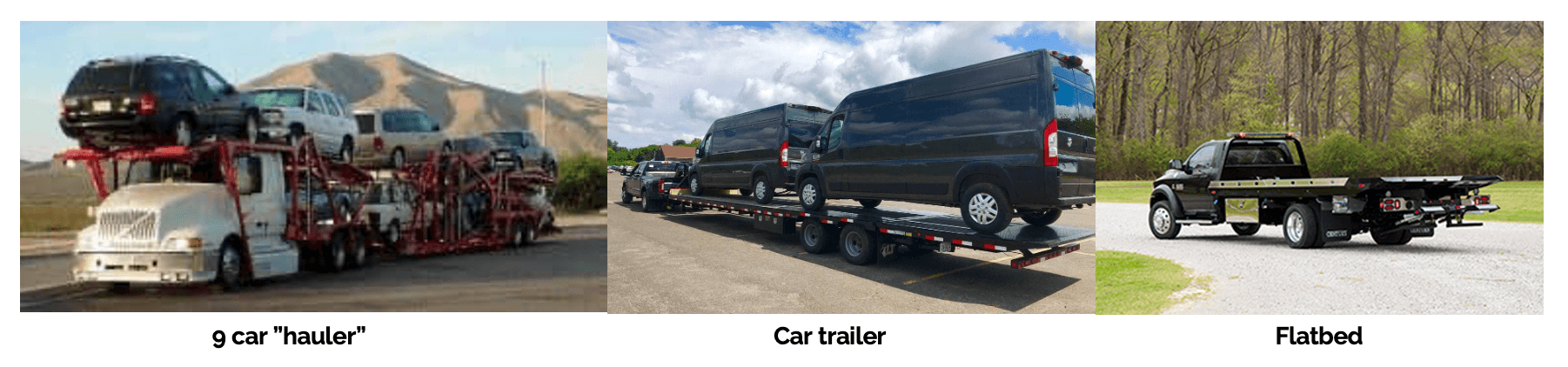
This is what an open car carrier looks like:
this is what open car carriers look like

There are different types of open car carriers or transporters, but the general idea is that they are “open”.  These are the most common type of car carriers and typically less expensive than enclosed car carriers. Shipping your car in an open car carrier means it will be exposed to the elements (rain, snow, hail, wind, rocks, etc.).


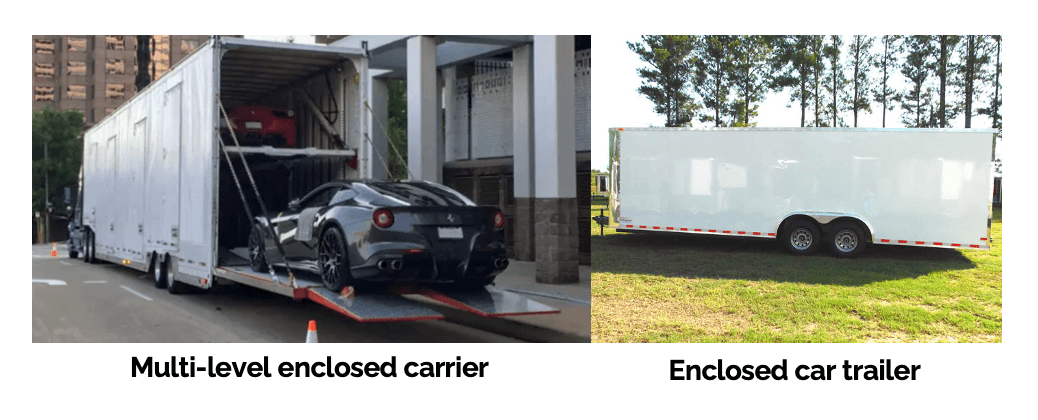
Enclosed car carriers look like this:
this is what enclosed car carriers look like

Enclosed car carriers provide better protection from the elements and theft, and are typically more expensive for shipping your car. We recommend enclosed car carriers for classic, luxury, exotic, or one-of-a-kind vehicles that are considered expensive or valuable.


Please note that the price you see in the free instant quote on our website may be different than the price you see when you place an order because the quote assumes a standard car being shipped in an open car carrier.

What is the Bill of Lading?

The Bill of Lading is a document used by shipping companies as part of the inspection they do when they pick up your car to record any possible damage prior to shipping.  When your car is delivered to you, you will be asked to sign the Bill of Lading, which indicates you have received your car and that it was not damaged during shipping.


If you notice any damage to your car that may have occurred during shipping, note the damage on the Bill of Lading before you sign it and Contact us within 24 hours of delivery to report any damage.

Is my car insured during shipping?

Yes. RunBuggyOne verifies every transporter carries the right insurance to transport your vehicle.  RunBuggyOne also carries a separate insurance policy to further protect your vehicle. We recommend that you confirm your personal auto insurance policy is up-to-date, that it provides coverage for car shipping, and that you maintain coverage for the duration of your shipment.

Should I fill up my car with gas before it goes on the truck?

We recommend having no more than 1/4 tank of gas in your car at the time of shipping, which is just enough for the transporter to load and unload your car. If you have a full tank of gas, it will add more weight and the transporter may need to drain the gas to lessen the load.

What do I do with my license plate(s)?

Take any license plates off the vehicle and put them in the glove box. This will ensure your vehicle does not accidentally get charged while going over any toll roads or bridges. We recommend you also keep the vehicle registration in the glove box as well.

How do I cancel my order?

If you need to cancel your order for any reason, you may do so at any time up to when your car is loaded on the truck. Simply contact us and let us know you need to cancel.

Still Got Questions?

If you don’t see the answer to your car shipping question here, then please feel free to contact our team. We’re here to help make your car shipping experience stress-free.

Contact us

Door-to-Door Transport

Open Carrier Car Shipping

Enclosed Car Shipping

Expedited Car Shipping